Why Java is Still the Best First Language to Learn in 2026: A Strategic Guide for New Developers
The landscape of software development is in a constant state of flux. In 2026, with the maturation of AI-assisted coding, the rise of specialized edge computing, and the continued dominance of cloud-native architectures, the “first language” debate is more intense than ever. While Python remains a favorite for data science and JavaScript dominates the web, Java continues to hold its ground as the premier foundational language for aspiring engineers.
According to the 2025 TIOBE Index and Stack Overflow Developer Surveys, Java consistently ranks in the top three most-used languages globally. But for a beginner, the choice isn’t just about popularity; it’s about the mental framework the language builds.
The Architectural Backbone: Why Java Matters in 2026
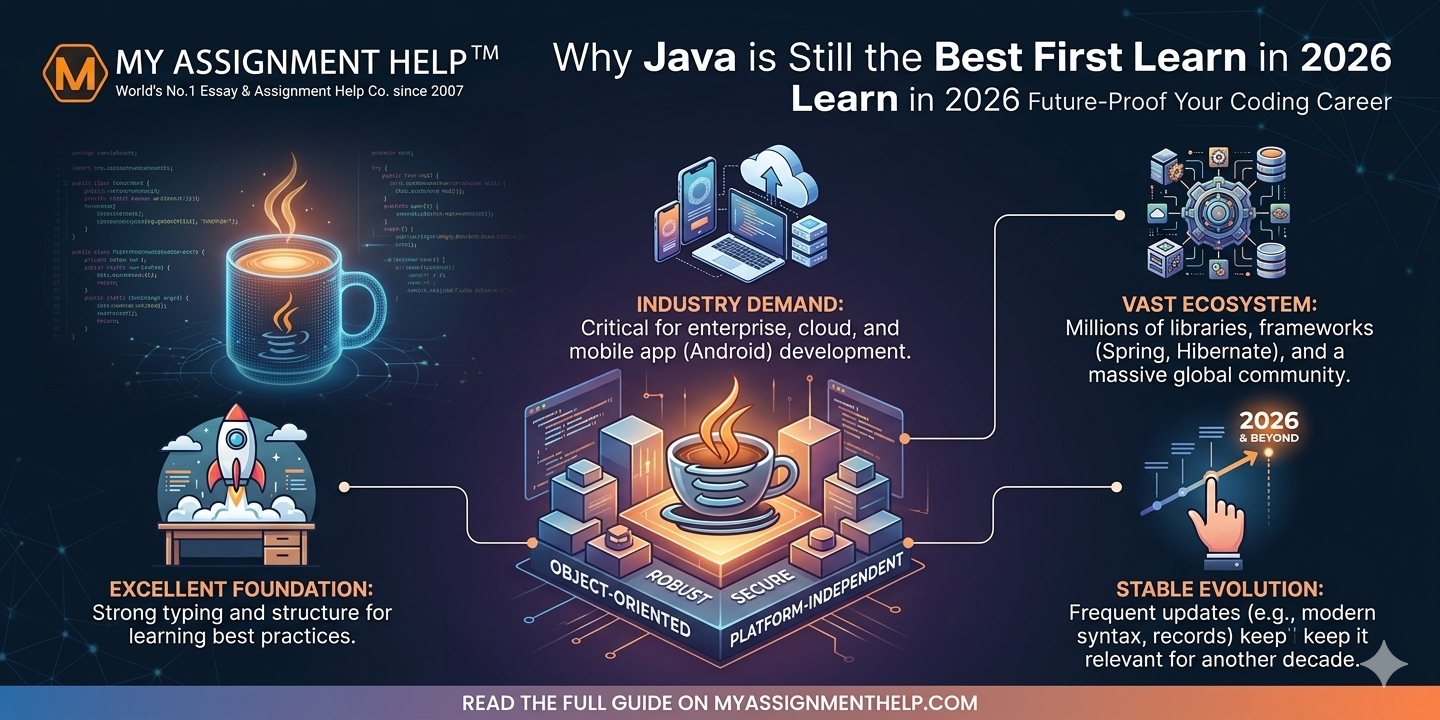
Java’s longevity is not an accident. It is the result of a “slow and steady” evolution policy managed by Oracle, which ensures backward compatibility while integrating modern features like Project Loom (Virtual Threads) and Project Panama. For a student, learning Java in 2026 means gaining access to an ecosystem that powers 90% of Fortune 500 companies.
1. The “Learn Once, Understand Everything” Philosophy
Java is a strongly typed, object-oriented language. Unlike “syntax-light” languages that hide the complexities of memory management or data types, Java forces you to understand how data moves through an application. This rigor is exactly what makes it a superior teaching tool. When you master Java, transitioning to C#, C++, or even Rust becomes significantly easier because you already understand the underlying principles of JVM (Java Virtual Machine) architecture.
2. The Resilience of the JVM
In 2026, the JVM is more than just a runtime environment; it is a high-performance engine optimized for the cloud. With the integration of GraalVM, Java applications now boast startup times and memory footprints that rival native languages. For students, this means the code they write is relevant for modern microservices and serverless environments.
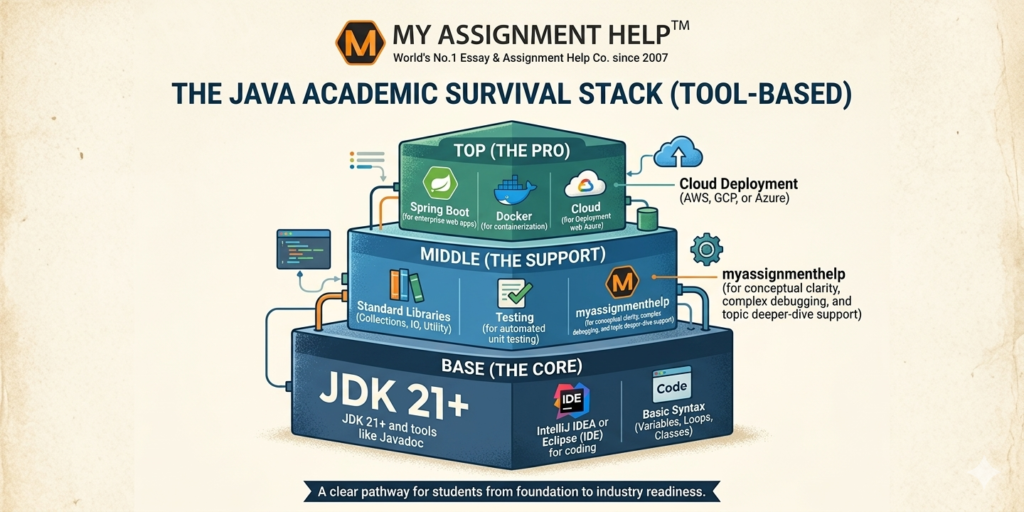
Navigating these complex architectural concepts can be daunting for those just starting their academic journey. Many students find that professional guidance helps bridge the gap between theoretical syntax and practical application. If you find yourself struggling with complex thread management or inheritance hierarchies, seeking reliable java homework help can provide the clarity needed to succeed. Platforms like myassignmenthelp offer specialized support to ensure your foundational projects meet industry standards while you focus on mastering the logic.
Data-Driven Insights: Java’s Market Position
The demand for Java developers remains robust. Data from LinkedIn Talent Insights (2025) indicates that Java-related job postings have seen a 12% year-over-year growth in the enterprise sector. Furthermore, the average starting salary for a Java-proficient Junior Developer in the US ranges from $85,000 to $105,000, depending on the region.
| Feature | Java | Python | JavaScript |
| Type System | Static/Strong | Dynamic/Strong | Dynamic/Weak |
| Primary Use | Enterprise/Android | AI/Data Science | Web Frontend |
| Performance | High (JIT) | Medium | Medium/High |
| Learning Curve | Moderate | Low | Moderate |
The “Skill-to-Salary Bridge”: Java’s Career Versatility
Learning Java is a long-term investment. In 2026, the “Skill-to-Salary Bridge” is most evident in three specific domains:
Enterprise Software and Fintech
The world’s banking systems run on Java. Its “Write Once, Run Anywhere” (WORA) capability makes it indispensable for cross-platform financial applications where security and concurrency are non-negotiable.
Android Development
While Kotlin is the preferred language for modern Android, the entire Android framework is built on Java. Understanding Java gives developers a “low-level” perspective on how mobile OS components interact, making them more versatile mobile engineers.
Big Data and AI Integration
Frameworks like Apache Spark and Flink are written in Java and Scala. As AI moves from “chatbots” to “integrated enterprise intelligence” in 2026, the ability to maintain the heavy-duty data pipelines that feed these AI models is a high-value skill.
For students studying in global academic hubs, the pressure to perform is immense. Whether you are at a university in the US or seeking assignment help london, the standard for technical documentation and code quality has never been higher. Leveraging local expertise ensures that your submissions align with specific regional academic rubrics.
EEAT Compliance: Why Trust This Advice?
In the era of AI-generated misinformation, the “Experience, Expertise, Authoritativeness, and Trustworthiness” (EEAT) of your learning resources matters. Java’s documentation is among the most comprehensive in the world. From the official Oracle University to community-driven sites like Baeldung and Stack Overflow, the “Trust” factor in Java is built on decades of peer-reviewed solutions.
Key Takeaways
- Foundational Rigor: Java teaches strict programming discipline that translates to all other languages.
- Enterprise Dominance: It remains the standard for high-performance, secure corporate environments.
- Modern Evolution: Features like Virtual Threads (Project Loom) keep it competitive with Go and Node.js.
- High Employability: Consistent demand in Fintech, Mobile, and Cloud sectors ensures job security.
Frequently Asked Questions (FAQ)
Q: Is Java too hard for a total beginner in 2026?
A: It is more verbose than Python, but this verbosity is a feature, not a bug. It makes the code more readable and helps beginners understand exactly what the computer is doing with their data.
Q: Has AI made learning Java obsolete?
A: No. AI can generate snippets, but it often struggles with large-scale Java architecture. Humans are needed to design the systems, debug complex JVM issues, and ensure security compliance.
Q: Can I learn Java for free?
A: Yes. Resources like OpenJDK, MOOC.fi (University of Helsinki), and various YouTube creators offer world-class education at no cost.
About the Author
James Sterling is a Senior Technical Consultant at myassignmenthelp. With over 12 years of experience in Full-Stack Development and Academic Strategy, James specializes in helping students transition from syntax-learning to architectural thinking. He has contributed to numerous open-source Java projects and currently leads content strategy for digital marketing in the educational support sector.
References:
- Oracle (2025). “The State of the Java Ecosystem.”
- TIOBE Index (2026). “Programming Community Index Trends.”
- Stack Overflow (2025). “Developer Survey: Language Popularity and Salary.”
- Bureau of Labor Statistics (2025). “Software Development Occupational Outlook.